Introduction
In this article, I’m hoping to explore the origins of the bimbo, bimbo feminism, and to try to place bimbo feminism relative to the history of the feminist movement. From there, I’d like to leave you with interpretations on the ways in which bimbo feminism could be interpreted as either a positive or negative development for the greater feminism as a whole, letting you come to your own conclusions.
The Bimbo
What is a bimbo?
In the past century, the term bimbo has largely been used as a pejorative against women. Per Deborah Linton, culture writer for Vogue magazine, the generally accepted definition boils down to “an attractive but unintelligent or frivolous young woman,” but the concept of the bimbo can really be broken down to (generally insultingly) describe a woman who displays the following three traits:
- Hyperfeminine
- Hypersexual
- Unintelligent or naïve

Where did it come from, where did it go?
Bimbo is a word of vague origin with far and few particularly reputable sources solidifying the course of the life and evolution of the term over the centuries.
One such fairly consistent origin story, however, is that the term is derived from the Italian bambino, a term for baby or child. It first appeared in American English around the early 20th century, used as a belittling term for an “inconsequential man” (Blevins), but by the 1920s, the usage of the word began to shift towards women, incorporating notions of physical attractiveness combined with shallowness or lack of intelligence. By the 1930s, those female connotations had strengthened and become synonymous with the “dumb blonde” stereotype, which then gained media traction and was reinforced through various cultural representations, portraying women as sexually promiscuous and intellectually inferior in both films and literature.
The term saw a resurgence in the late 20th century – particularly in the 1980s – amid high-profile scandals that emphasized the stereotype. Bimbo solidified its derogatory status, used as a term to dismiss or diminish women based on appearance and perceived lack of intellect, and has largely sustained that usage since.
Bimbo Feminism
What is bimbo feminism?
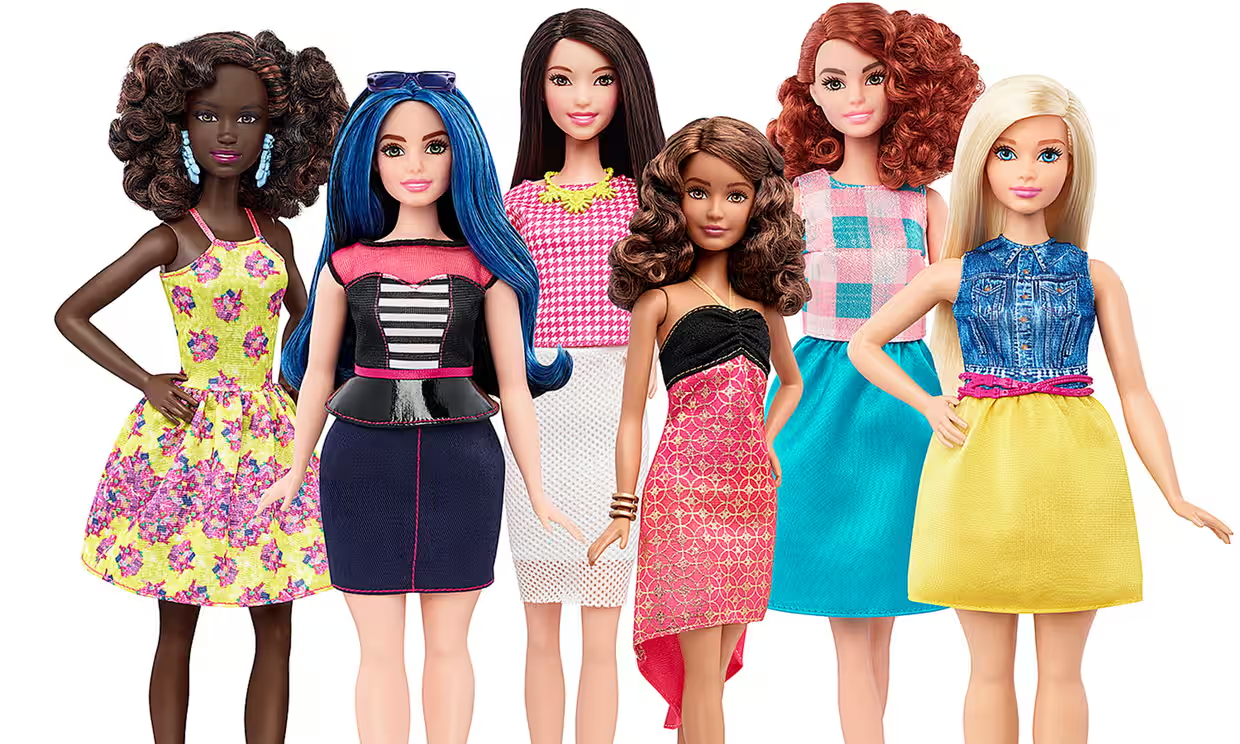
Bimbo feminism is a contemporary feminist movement, seemingly formed as a reaction to “girlboss” feminism (more on that later), aiming to reclaim and redefine the term “bimbo,” so as to take power away from it as a derogatory label. The movement embraces both traditional feminine aesthetics as well as hyper-femininity as tools for empowerment, rather than oppression. It incorporates an ironic and self-aware interpretation of the stereotypical “bimbo” by emphasizing that these are not only choices they are actively making, but that they are proud to embody those traits, intertwining it with feminist and progressive messages.
Bimbo feminism has emerged primarily from online platforms, particularly TikTok, where the subculture is oftentimes referred to as “BimboTok.” This coterie uses humor and satire to critique societal norms about intelligence, beauty, and the value of women. It has roots in the broader trend of reclaiming pejorative terms within various marginalized communities, seeking to subvert oppressive narratives by transforming them into symbols of identity and resistance.
How did we get here?
The First Wave
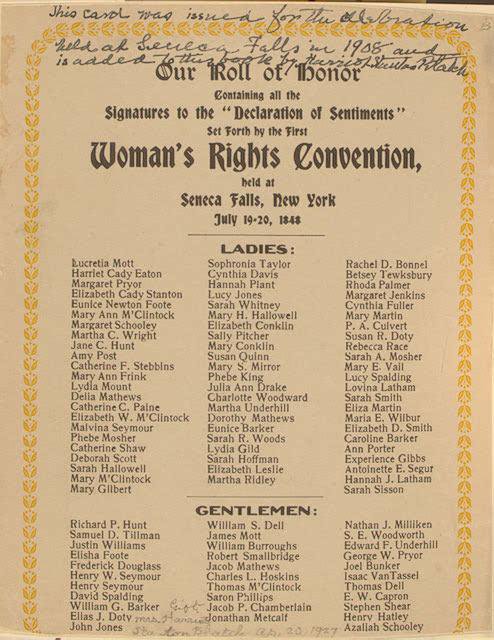
Starting in July 1848, the “first wave of feminism” refers to the first organized movement aiming to gain rights for American women. Attendees to a convention held in Seneca Falls, New York signed the Declaration of Sentiments, which advocated for women’s equality to men and demanding, among several others, the right to vote.
Though the early movement had some ties to abolitionism, the passage of the 19th Amendment in 1920 – regarded as fulfilling the objective of the first wave – guaranteed only white women the right to vote, Black and other women of color would continue to face discrimination.
The Second Wave
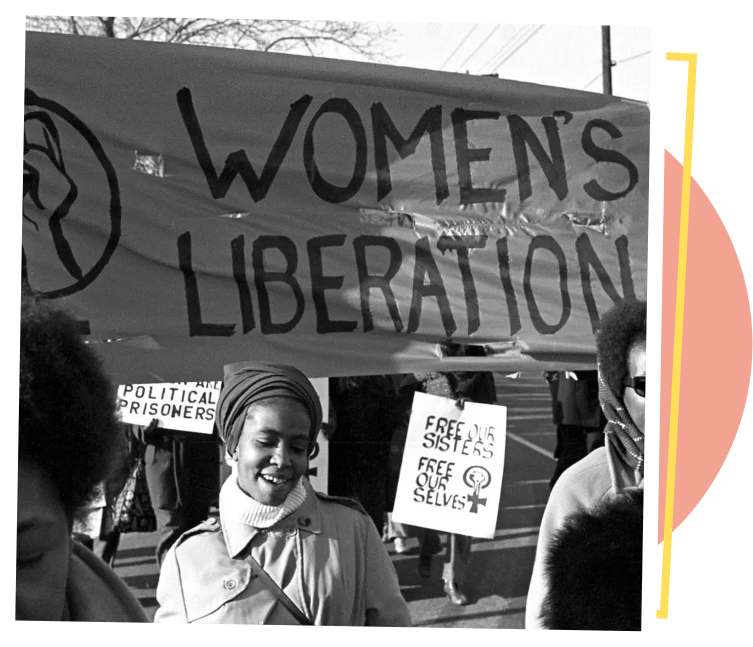
Starting in 1963 with the publication of Betty Friedan’s The Feminine Mystique, an argument against the restrictive societal expectations and roles as wives and mothers that women faced, the second wave sought to redefine gender roles and end sexist discrimination. Drawing inspiration from the civil rights movement and the Vietnam War protests, feminism grew as a political force throughout the 1970s, dubbed as the “women’s liberation movement,” with key achievements including the passing of the Equal Pay Act and the Supreme Court decisions relating to reproductive freedom in Griswold v. Connecticut (1965) and Roe v. Wade (1973).
Like its predecessor, second-wave feminism faced criticisms for its prioritizing privileged white women, prompting Black women to form their own groups like the National Black Feminist Organization (NBFO). Unfortunately, however, the momentum behind the women’s liberation movement waned following the election of Ronald Reagan in 1980.
The Third Wave
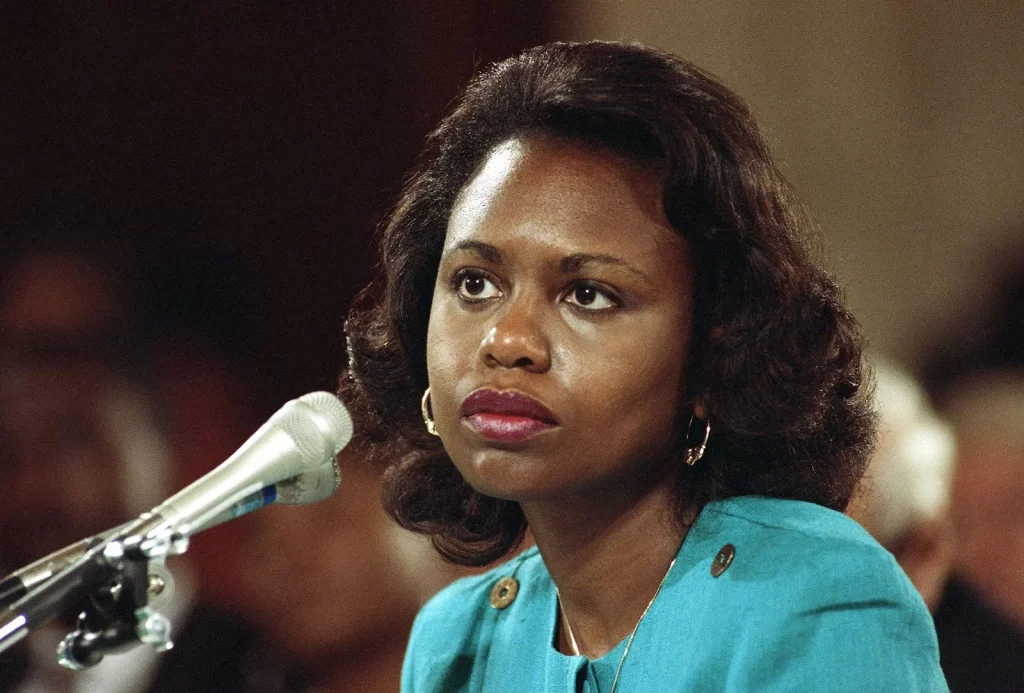
While second-wave feminism achieved significant progress surrounding gender equality and women’s rights, the early 1990s saw the emergence of third-wave feminism, addressing unresolved issues like sexual harassment in the workplace and the lack of women in positions of power. The third wave is regarded as having started in 1992, inspired by Anita Hill’s testimony against Supreme Court nominee Clarence Thomas, in a year that saw a record number of women elected to Congress. Third-wave feminists embraced rebellion and the expression of sexuality and individuality, with many rejecting the term “feminist” and adopting traditionally feminine styles.
The 1990s also saw the formation of the “Riot grrrl” musical genre and feminist punk movement, which infused pop music with feminist themes of sexism, patriarchy, abuse, and rape. This wave was also more inclusive, integrating concepts of intersectionality – the examination of overlapping oppressions, such as those based on race, class, gender, and more – as well as gender theory, including support for trans rights, effectively working to evolve the definition/boundary of femininity.
The Fourth Wave
As it stands today, it isn’t immediately obvious where the distinction between the third and the fourth wave lies, if there is one. There is no agreed-upon “end date” for the third wave, but explosion of the #MeToo movement into the public consciousness in 2017 is regarded as starting a new brand of feminist activism, with much credit to social media’s ability to propagate ideas. The #MeToo movement is a campaign against sexual abuse, harassment and rape culture, in which people publicize their experiences as victims.
Fundamentally, much of the fourth wave pertains to the holding of men in power accountable for their actions, as well as shining a light on the systems that allow or even enable such misconduct. Like its predecessors, the fourth wave continues to engage and integrate concepts of intersectionality and inclusivity, with emphasis on diversity, body positivity, and the rejection of the power of the male gaze to define the value of a woman.
Choice Feminism
Choice feminism is a contemporary feminist ideology emphasizing that the individual choices made by women are inherently feminist; that the freedom to choose – whether to stay at home, pursue a career, wear makeup on a given day, or to adopt any other lifestyle – constitutes a feminist act simply because it is a woman’s choice. The underlying assertion seems to be that feminism should be about expanding choices and respecting women’s autonomy to make those choices.
In popular culture, we see merchandise boasting slogans such as “Eyeliner sharp enough to kill a man” and “The heels of our stilettos will stomp out the patriarchy,” all of which suggest that personal style choices can be acts of feminist resistance. In Sex and the City, Charlotte’s decision to forsake her career and devote herself full-time to a man who is as wealthy as he is vacuous, repressed, and unloved by her, is itself framed as a feminist act. Every day, women make the decisions as to whether they will put on makeup, wear high heels, or engage in some other beauty routine. Choice feminism celebrates these decisions as expressions of personal empowerment and autonomy, focusing on individual achievements and personal agency.
However, the critical question remains: to what extent are these decisions genuinely free choices? Are they truly expressions of individual autonomy, or are they molded and constrained by the pressures of societal expectation and structural inequality? By emphasizing the choice of the individual, does choice feminism neglect the need for systemic change that addresses the underlying inequalities that affect said choices?
Bimbo Feminism
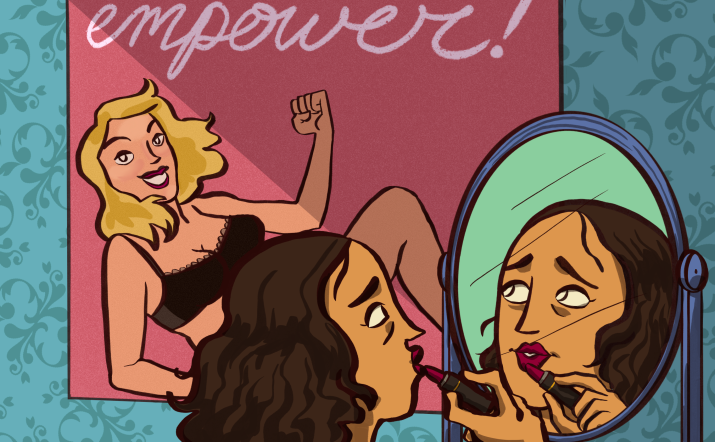
To reiterate, bimbo feminism embraces established, traditional feminine aesthetics and hyper-femininity as tools for empowerment, rather than oppression. It aims to combine an ironic interpretation of the stereotypical bimbo with progressive messages to critique societal norms held against women, particularly as they pertain to femininity, sexuality, and intelligence. The objective is to challenge the use of the pejorative “bimbo” and turn it into a symbol of pride and resistance.
Bimbo feminism can be seen as a response to more traditional forms of feminism that often prioritize intellectualism or professional success in ways that can feel exclusive or even dismissive of those who choose to embrace different lifestyles or aesthetics. It contrasts sharply with “corporate” or “girlboss” feminism, which focused on women’s empowerment primarily through career success and economic power within existing capitalist frameworks.
Bimbo feminism seems to align closely with fourth-wave feminism’s focus on the impact of the male gaze, though with an emphasis on its subversion. It advocates for a feminism that is accessible – rather than pressuring – to the individual, while recognizing that empowerment can come in many forms.
Receptions on Bimbo Feminism
It’s great
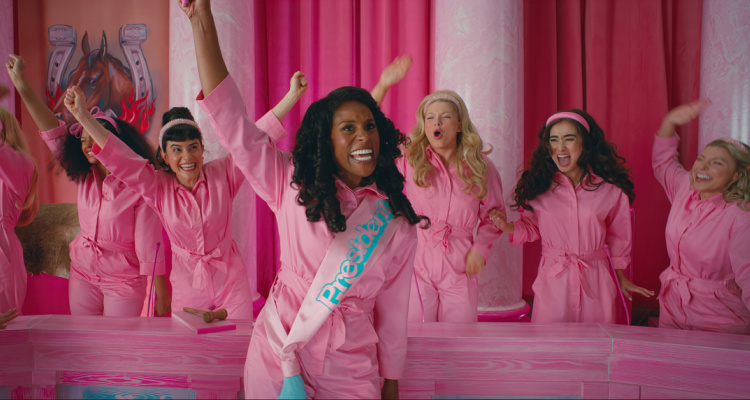
Bimbo feminism emerges from the intersection of digital culture, feminism, and the reclamation/subversion of harmful stereotypes. The movement, particularly vibrant on online platforms like TikTok, can be interpreted as offering a complex and nuanced take on female empowerment and identity, and deserving of a legitimate place in feminist discourse.
It represents the reclaiming of the historically derogatory term “bimbo,” mirroring efforts seen in other social movements in which marginalized groups reclaim such terms to empower themselves and rewrite narratives. Bimbo feminism aims to transform the the term from a stereotype of mindlessness to an emblem of empowerment, embracing hyper-femininity as a statement of choice and identity rather than as a weakness that society would negatively correlate against intelligence. It empowers individuals to love themselves in a society that would criticize women for their intellects and appearances, leveraging humor and satire as a light-hearted approach to be able to laugh at both themselves and the absurdities of societal expectations – which, in itself, can be a form of resistance.
One such example, used educationally on the internet, is the content genre of explaining complex real-world concepts “for the girls”; creators educate users through the use of elaborately-feminine metaphors, such as explaining inflation using an analogy of music and makeup, or even likening international politics to high school social dynamics. Online, the bimbo aesthetic is also being used to discuss topics like sex work, LGBTQ+ rights, and racial justice, in an effort to bridge serious subjects with engaging content, potentially educating and involving those who otherwise might not have engaged with any degree of activism.
Bimbo feminism provides a critique of the pressures women face to conform to standards of intelligence, professionalism, and competence, particularly in male-dominated fields. By celebrating “mediocrity” or the freedom to be “loud and wrong,” the movement challenges the notion that women must outperform men in order to be considered equal. It offers an inclusive space where women can express their femininity without the burden of proving their worth through the traditional measures of success, while at the same time emphasizing that femininity and intelligence are not mutually exclusive concepts. Additionally, its popularity online as of late may possibly underscore a need for the feminist movement to evolve and embrace new expressions and identities in order to stay relevant and inclusive.
It’s not so great
On the contrary, many of the fundamental elements of bimbo feminism are those which draw the most criticism.
Critics of bimbo feminism highlight that, by trying to subvert the stereotypes linking femininity to frivolousness and intellectual deficit, the movement may actually be unintentionally upholding and reinforcing them, perpetuating these traditional patriarchal views that feminists of movements past have fought against, as well as perpetuating a superficial understanding of gender roles that prior movements have aimed to challenge. By embracing and even glorifying some of these elements, such as the “head empty” stance/aesthetic, bimbo feminism risks undermining the respect and credibility that women have fought to establish for themselves, especially in professional environments. It gets particularly muddy when we consider that the movement seems to simultaneously postulate that there is no correlation between a woman’s intelligence and how she chooses to express her femininity while also celebrating a “mediocrity” and the notion that it is okay to not be competent in some respects.
Moreover, the movement’s penchant for diluting complex ideas into oversimplified and sometimes incorrect explanations undercuts the feminist goal of empowering women through education and critical thinking. Aside from the controversy and backlash generated in response to an aforementioned instance of likening international politics to high school social dynamics, this trivialization of important issues can be seen as a step backward, potentially encouraging disengagement from serious discourse and thus aligning itself with the criticisms of choice feminism, where superficial empowerment is mistaken for substantive change, and once more raising the question surrounding the extent to which these choices are actually choices.
By emphasizing the hyper-feminine aesthetic tied to consumerism, bimbo feminism – like the “girlboss” feminism that precedes it – aligns itself closely with the same capitalist notions of empowerment that previous iterations of feminist discourse so heavily criticized. This commercial aspect, as well as the inclination to conform that it embeds in its subscribers, not only calls into question the economic ability of a given woman to subscribe to bimbo feminism (and thus challenging its inclusivity), but diverts attention away from fighting systemic issues and toward that participation in consumer culture – a problematic concept endemic to “choice feminism,” in which any choice made by a woman is seen as inherently feminist, even when it reinforces capitalist and patriarchal structures.
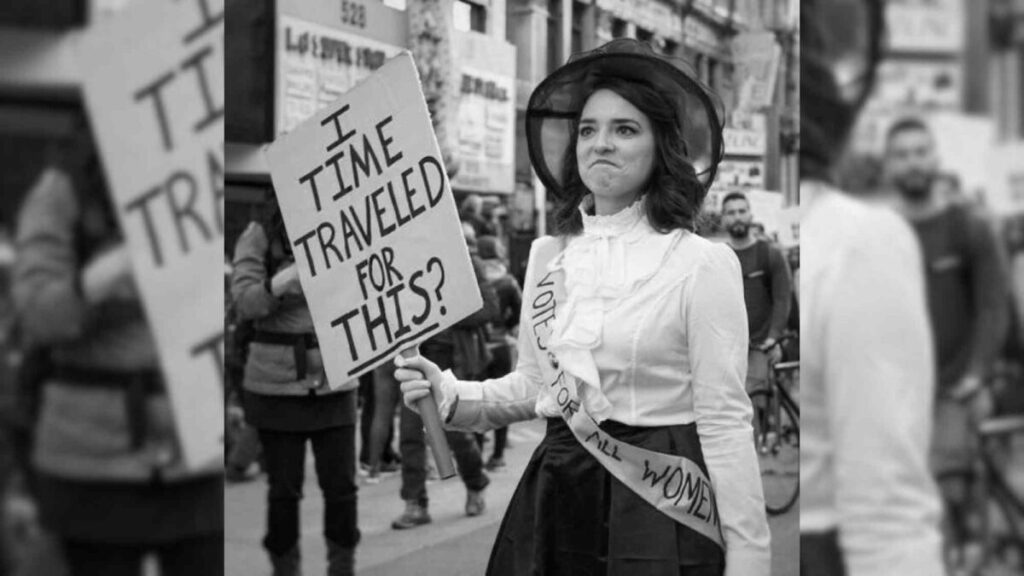
Audre Lorde, a noteworthy philosopher and activist for intersectional feminism, once wrote that “The master’s tools will never dismantle the master’s house,” postulating that using the methods and strategies that uphold these patriarchal and capitalist systems can never effectively bring about genuine change. Bimbo feminism operates within these structures by embracing consumer culture and traditional gender aesthetics – regardless of its ironic or subversive intent – and may fail to achieve any substantial feminist progress, instead reinforcing the systems it may have originally been trying to critique.
Conclusion
I hope I’ve been able to educate and present the concept of bimbo feminism in an impartial manner. With all that you’ve read here, how do you now feel about bimbo feminism and its potential to drive change?
